3 Reasons Why Your Partner Can’t Be Everything in a Romantic Relationship
A healthy relationship does not mean relying on only you and your intimate partner for happiness, validation, and support. Instead, it involves a conscious choice to maintain self-love, self-care, friendships, and personal identity alongside romantic love.
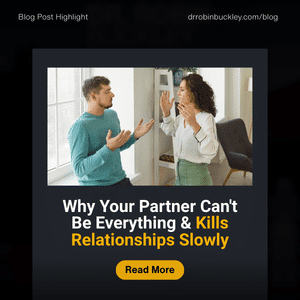 A common reason people place high expectations on a boyfriend, girlfriend, or spouse is fear — fear of abandonment, fear of unmet needs, or fear shaped by past relationships.
Almost all of us seek reassurance by assuming that if one other human meets all our own needs, we will finally feel safe and free from disappointment. But this assumption is often wrong. Even the most loving intimate partner cannot ensure that all emotional needs are adequately met all the time.
For example, a woman might rely on her partner as her only friend, limiting connection with female friends or different people in her life.
Over time, this reduces freedom, increases pressure, and can create resentment in the current relationship. When expectations become too significant, both partners may feel trapped rather than free.
1. When “we’re so close” turns into pressure
At first, making your partner your go-to for everything feels intimate. You tell them everything. You process every emotion out loud with them.
They’re the first call when you’re stressed, excited, bored, anxious, angry, or unsure. That closeness can feel like love at its best.
But over time, something subtle happens. Your partner stops being a person you choose and starts becoming a resource you rely on. The emotional load increases. The space to miss each other shrinks. And the relationship shifts from connection to obligation.
That’s when resentment sneaks in. Not always loudly. Sometimes it shows up as withdrawal, irritability, or that vague feeling of being “too much” or “not enough” at the same time.
2. One person can’t be a whole village
 Humans were never meant to operate in pairs only. Historically, emotional life was spread across friends, family, community, mentors, coworkers, and extended networks. Somewhere between romantic movies and social media, we decided our partner should replace all of that.
That’s a lot to ask of one nervous system.
When your partner is your only outlet for stress, they feel it. When they’re your only source of validation, they carry that weight.
When they’re the sole witness to every thought spiral, they eventually burn out or shut down. And then both of you feel confused about why the relationship feels heavier than it used to.
3. Social diversification
In business, we talk about diversification to reduce risk. Relationships work the same way. Social diversification means spreading your emotional, intellectual, and social needs across multiple people instead of funneling everything into one relationship.
This doesn’t weaken intimacy. It protects it.
You might have:
- A friend you vent to about work
- A sibling or old friend who knows your history
- A mentor you process decisions with
- A workout buddy or hobby group where conversation stays light
- A therapist who handles the deep emotional excavation
When those needs are distributed, your partner gets to show up as a partner, not a catch-all solution.
When individuals feel fulfilled in multiple areas of life, they bring more happiness, affection, and emotional stability into their current relationship. They also maintain a sense of freedom, which strengthens attraction and respect.
How Dr. Robin Buckley Can Help
Many people understand why your partner can’t be everything, but still struggle to break patterns of overdependence, emotional pressure, or unrealistic expectations.
That’s because relationship dynamics are often shaped by past experiences, attachment styles, and unmet emotional needs — not just logic.
You can find couples coaching and resources that help you build healthier boundaries, strengthen self-trust, and create more balanced, fulfilling relationships without losing intimacy.
If you’re tired of feeling overwhelmed, responsible for someone else’s happiness, or worried your relationship is losing its spark, support is available. Connect with Dr. Robin Buckley now. Call at 1 844-543-3211!
The Hidden Cost of High Expectations on One Human Being
Placing high expectations on one human being to meet all emotional needs often leads to unmet needs on both sides.
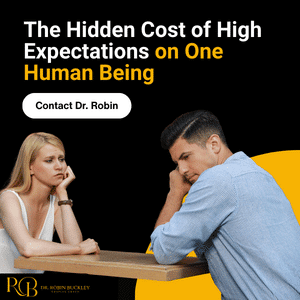 Your partner may feel responsible for your happiness, while you may feel disappointed when they inevitably fall short. This dynamic is a common reason relationships begin to feel heavy instead of supportive.
Quality time can also suffer. When partners spend less time nurturing outside friendships or personal interests, the relationship becomes the only outlet for stress relief and validation.
Over time, this reduces novelty and affection and can create emotional fatigue. Ironically, spending single time apart — pursuing hobbies, friendships, or self-care — often strengthens romantic connection rather than weakening it.
Some of us fear that independence means emotional distance, but the opposite is often true. When two people maintain their individuality, they return to each other with more energy, more focus, and a stronger sense of choice.
Why Does This Actually Make Love Stronger?
Here’s the paradox. When your partner isn’t responsible for everything, they often become better at the things that matter most. Conversations feel more intentional. Time together feels less transactional. Emotional support feels chosen rather than expected.
 Some people feel concerned about this shift at first because the idea of independence can seem like distance. But many eventually realize it actually creates more peace and a healthier sense of desire between partners.
You also bring more to the relationship. You’re not arriving depleted from unloading all day. You have an outside perspective. You’re stimulated by other relationships and experiences. That energy shows up at home.
When individuals realize they are allowed to meet needs in multiple places, they often feel renewed desire to connect rather than obligation.
This is especially important for high-functioning, driven people who already carry a lot of mental load. If your partner is the only place you put it down, the relationship becomes a dumping ground instead of a refuge.
Eventually, partners become less concerned about expectations and more focused on enjoying each other, which increases emotional peace.
A simple gut check
Ask yourself:
- If my partner needed space for a week, would I still feel emotionally supported?
- Do I expect my partner to fix feelings I haven’t processed anywhere else?
- Am I turning to them out of connection or convenience?
If the answer makes you uncomfortable, that’s useful information, not a verdict.
Sometimes patterns from past relationships shape how we behave in the present. Recognizing those influences allows you to make a conscious choice about how you want to show up differently in your current relationship.
Ready to create a healthier relationship dynamic? Connect with Dr. Buckley and start building connection without pressure.
Choosing Love Instead of Assuming Responsibility
A healthy relationship thrives when connection is a conscious choice rather than an obligation. Assuming that your partner should meet all your own needs can create pressure that slowly erodes intimacy.
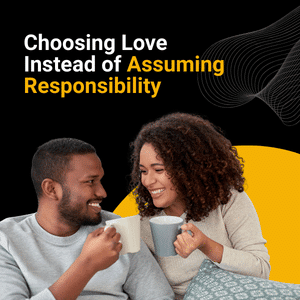 Instead, couples who prioritize self-love, self-care, and independent identity often experience stronger romantic love over time.
Writing about relationship dynamics often highlights one key difference between struggling couples and thriving couples: thriving partners understand that happiness is shared, not outsourced.
They seek connection without expecting perfection. They allow each other space to explore personal growth while still maintaining emotional closeness.
The bottom line
Love thrives when it’s chosen, not when it’s overloaded. Your partner should be a priority, not your entire infrastructure. When you build a fuller support system, you don’t lose intimacy. You create room for it to actually last.
Strong relationships aren’t built on two people clinging to each other for survival. They’re built by two whole people choosing each other again and again, supported by a world bigger than just the two of them — which is ultimately why your partner can’t be everything.