How The Weather Channel Chose To Support Men’s Sexual Wellness And Fostered The Inequity

In all fairness, it wasn’t the weather channel itself; it was an ad on its website (6:15 am, 2/17). The ad was for a treatment for erectile dysfunction, a device called the Eddie.

The tagline is catchy, “Thrills without pills”, and the design is simple – a slightly oval-shaped ring worn on a penis to contain blood flow and help maintain an erection.

Essentially, this is a tweak on the penis ring (also known as a c**k ring). How wonderful that men have another option to ensure their sexual wellness.

My issue is that while the Eddie and other ED treatments are advertised without restrictions, devices for women’s sexual wellness are taboo.

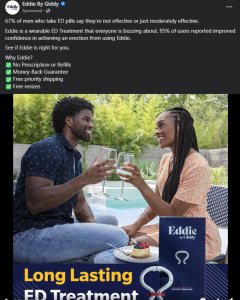
Consider how often you see advertisements for ED treatment on TV commercials, in print media, and on websites. Thanks to the social media algorithms, 5 minutes after seeing the Eddie ad on Weather.com and looking up the company, the post below appeared on my Facebook feed:

how the weather channel chose to support men’s sexual wellness and fostered the inequity

Related article“What Vibrator Should I Get My Daughter?”: The Most Common Question I Get After My TED Talk

I am not begrudging men from having sexual wellness options. Still, I am appalled by yet another example of how men’s needs and wants are publicly discussed, promoted, and supported while women’s needs and wants are not.

Take, for example, my experience last month when one of my social media posts was blocked on LinkedIn and muted on TikTok.

The posts talked about the inequity when it comes to discussing Viagra versus vibrators. Once “vibrators” was removed from the post, LinkedIn let it go through. TikTok still has my post muted.

So tell me – what is the difference between a “buzzing” penis ring and a vibrator? Both stimulate blood flow to erogenous zones. Both can be or are (depending on the company; see BlushVibe) labeled as sexual wellness devices.

The ONLY difference is that one is designed for male use and the other is designed for female use. Is it any wonder that women are still embarrassed to ask questions, say what they want, and fully embrace their wellness in all areas of their lives when society, companies, and politicians are telling us to stay quiet, that we are secondary, and just do what we’re told?

Related article: Let’s Talk About It: Sexual Wellness During Perimenopause and Menopause

True gender equality means that conversations about health and pleasure should include everyone, not just MEN. When platforms silence products or discussions that highlight female needs, they silence women’s voices too.

This pattern of exclusion undermines women’s ability to make informed choices and perpetuates a biased narrative that favors one side of wellness over the other.

Ignoring gender differences in advertising and access to resources limits the growth of human capital, since health and confidence play a direct role in productivity and opportunity.

Unequal representation also affects mental health, leaving women with feelings of shame or invisibility in spaces that should promote their full well being. Evidence suggest that when wellness is inclusive, communities experience better overall health status.

Related articleMusterbation: Stop rubbing yourself the wrong way

Persistent gender inequality and gender discrimination in sexual wellness advertising exclude diverse perspectives on gender identity and sexual orientation.

While men’s options are promoted openly, women’s wellness tools remain hidden or censored. However, emerging evidence shows that when both men and women are given equitable representation in healthcare conversations, stigma decreases and progress follows.

So Weather.com, are you catching my vibe? How about creating some equity when it comes to promoting humans’ sexual wellness?

Why Coaching Works

Unlike therapy, which often looks back to understand how patterns formed, coaching is forward-focused. It’s about creating a strategy, developing new habits, and practicing them with guidance. A couples coach helps partners identify where their relationship “muscles” are weak and then offers the tools and exercises to make them stronger.

So yes—you can be a couple without coaching. But if you want to thrive as a couple, to build resilience and longevity, coaching can be the difference between barely holding on and genuinely enjoying the relationship you’ve built.

After all, nobody questions why athletes use coaches even when they’re already skilled. Why should couples be any different?

Dr. Robin Buckley has her PhD in Clinical Psychology from Hofstra University and is also a certified coach. She owns Insights Group Psychological & Coaching Services in New Hampshire, a practice offering coaching (executive, elite athletes, couples), neuropsychological evaluation, and cognitive behavioral therapy. Dr. Robin works specifically with executives and high-powered couples to achieve their goals efficiently and successfully through the use of a business framework. To find out more about Dr. Robin, please go to drrobinbuckley.com, or to learn more about her practice, https://igsouth.com/.